Welcome To The Official Website Of Vernette W Taylor
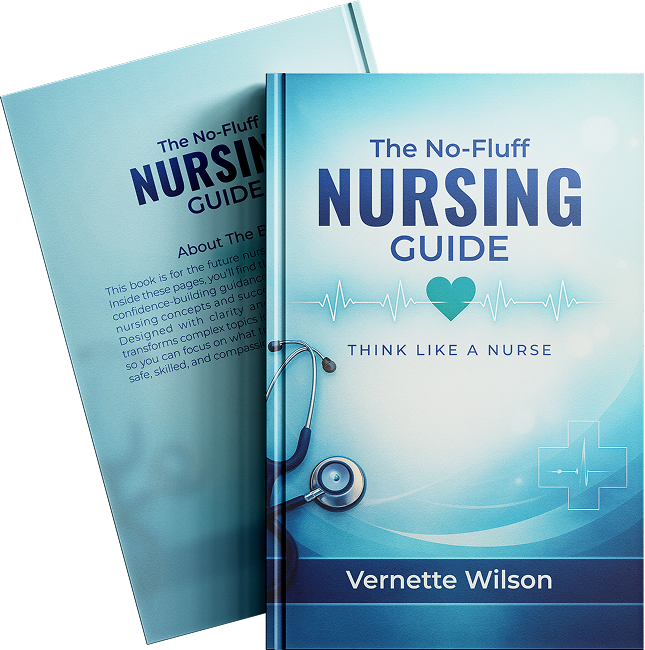
The No-Fluff Nursing Guide
Nursing school teaches the science, the exams, and the terminology. Real nursing, however, begins when those lessons meet the reality of patient care. Vernette W Taylor work focuses on that transition. Through practical insight and clear explanation, her writing explores how nurses learn to recognize patient changes, interpret clinical clues, and make decisions that protect patient safety during the fast-moving moments of everyday bedside care.

About the author
Vernette W Taylor
Vernette W Taylor approaches nursing from a place that many healthcare professionals will recognize immediately.
She has seen how different the profession can feel once education ends and clinical responsibility begins.
During training and early work in healthcare settings, she noticed something that many nurses quietly talk about with one another. Nursing school provides strong knowledge, but real clinical environments demand something more immediate.
The ability to interpret situations quickly.
A patient may look stable one moment and subtly different the next. Recognizing those changes early is one of the skills experienced nurses develop over time.
That idea gradually shaped Vernette W Taylor interest in patient safety and clinical reasoning.
As a licensed nurse and BSN student, she continues studying and working within the field while focusing on ways to make complex nursing concepts easier to understand.
Her writing avoids unnecessary technical language whenever possible. Instead, she focuses on clear explanations that nurses can apply during real shifts.
Her work is built on a simple belief.
The sooner a nurse understands what they are seeing, the sooner they can respond and keep their patients safe.
About the book
The No-Fluff Nursing Guide
A lot of nursing books teach information. And that matters. Nurses need to understand diseases, medications, and procedures.
But when someone starts working real shifts, another challenge appears. Things rarely happen one at a time.
A patient asks for help. Another patient needs medication. Lab results show up in the chart. Someone’s breathing starts looking a little different. And suddenly the question is no longer about memorized facts. It becomes a much simpler question.
What matters right now?
The No-Fluff Nursing Guide was written for that part of the job. The part where nurses are constantly noticing small details and deciding what they mean.
The book walks through practical parts of bedside care. Assessments that actually detect change. Lab values that matter. Fluids, electrolytes, Med-Surg priorities, and the decisions nurses make when several things demand attention at once.
The tone stays direct throughout. No complicated explanations. No unnecessary theory.
Just the kind of practical thinking nurses use every day when patient safety depends on noticing what others might miss.
Chapters
THE NO-FLUFF NURSING GUIDE

01
Book Chapter
How to Think Like a Nurse
This chapter rewires the way you approach patient care. Instead of vague “critical thinking,” it gives you a clear mental framework to assess, prioritize, and act quickly, turning uncertainty into confident clinical judgment.
02
Book Chapter
The Head-to-Toe Assessment Without Overthinking It
A practical, no-nonsense approach to patient assessment. You’ll learn how to move beyond checklists and start identifying subtle signs of deterioration before they become emergencies.
03
Book Chapter
Med-Surg Survival
Step into the reality of the floor. This chapter teaches you how to manage multiple patients, prioritize under pressure, and stay in control when everything feels urgent.
04
Book Chapter
Lab Values That Actually Matter
Cuts through the noise of endless lab ranges and focuses only on what truly impacts patient safety. You’ll learn how to read labs as real-time indicators of organ function and risk.
05
Book Chapter
IVs, Fluids, and Electrolytes (Made Simple)
Breaks down complex fluid and electrolyte concepts into clear, usable knowledge. Helps you understand not just what to give, but why it matters and what could go wrong.
06
Book Chapter
How to Avoid Being the New Grad Who Misses Something
A reality check for new nurses. This chapter focuses on the small mistakes that lead to big consequences, and how to build habits that protect both your patients and your license.
07
Book Chapter
SBAR That Actually Works
Transforms communication from routine reporting into a powerful clinical tool. Learn how to speak clearly, confidently, and in a way that gets immediate action.
08
Book Chapter
NCLEX Thinking vs Real-World Thinking
Bridges the gap between exam logic and real-life decision-making. Shows you how to move beyond textbook answers and think like a nurse at the bedside.
09
Book Chapter
ICU Basics for New Nurses
An introduction to high-acuity care where every decision matters. Prepares you to understand critical patients, advanced monitoring, and rapid clinical changes.
10
Book Chapter
ER Basics for New Nurses
Fast, unpredictable, and intense. This chapter prepares you for the emergency setting, where quick thinking and prioritization can make the difference between life and death.
11
Book Chapter
New Grad First Year Survival Guide
Guides you through the most challenging phase of your career. Focuses on building confidence, handling pressure, and navigating the realities no one prepares you for.
12
Book Chapter
Advanced Lab Interpretation
Takes your lab knowledge deeper by focusing on trends and clinical meaning. Helps you connect numbers to real patient conditions and anticipate complications.
13
Book Chapter
Delegation & Legal Protection
Teaches you how to delegate safely while staying legally protected. Clarifies what you can hand off, and what always remains your responsibility.
14
Book Chapter
Clinical Case Studies
Brings everything together through real-world scenarios. You’ll apply what you’ve learned, sharpen your judgment, and see how decisions play out in actual patient care.
Testimonials
what our readers say

Anna
CEO

“This book explains bedside thinking in a way that actually feels real.”

Jordan
Manager
“A clear and practical guide for nurses learning to trust their clinical judgment.”

James
Developer
“One of the most relatable explanations of real nursing decision-making.”